

Traveling from Hong Kong to Los Angeles is one of the world’s classic trans-Pacific journeys. Stretching across the vast Pacific Ocean, this route connects one of Asia’s busiest aviation hubs with one of North America’s most important gateways. Whether you’re traveling for business, tourism, family visits, or connecting onward to other destinations in the United States, understanding the flight duration can help you prepare for the experience ahead.
As of 2026, nonstop flights between Hong Kong International Airport (HKG) and Los Angeles International Airport (LAX) typically take around 13 hours, although actual travel times can vary depending on weather patterns, air traffic conditions, routing restrictions, and seasonal wind patterns. Current schedules show direct flights averaging approximately 13 hours to 13 hours 35 minutes, with some flights completing the journey slightly faster under favorable conditions. This journey is more than simply sitting on an airplane for half a day. Passengers cross thousands of miles of ocean, numerous time zones, and even the International Date Line. The experience can feel almost like time travel because travelers often arrive in Los Angeles on the same calendar day they departed Hong Kong. Understanding what affects flight duration and how to prepare can make the trip far more comfortable and enjoyable.
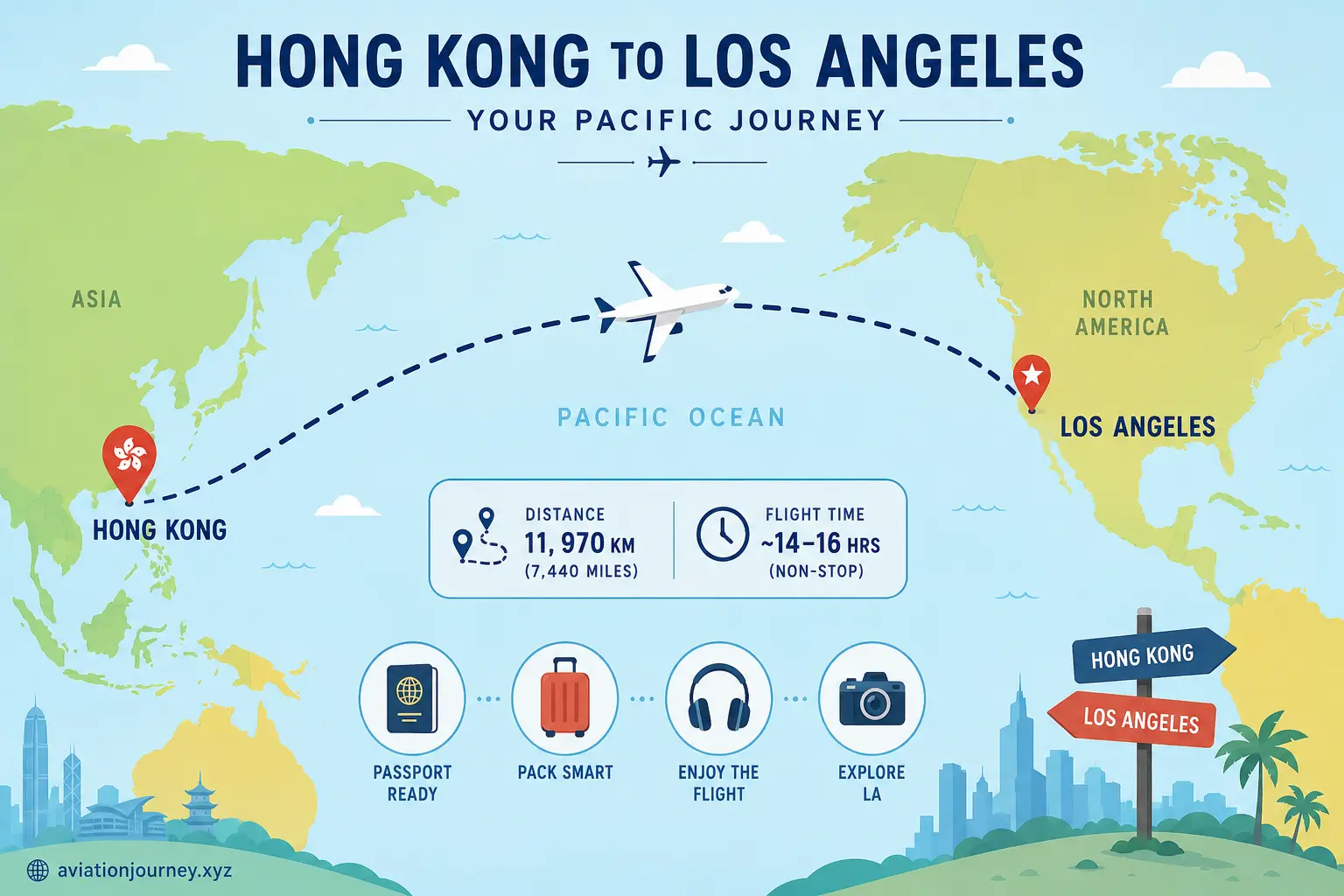
Understanding the Hong Kong–Los Angeles Air Route
Distance Between the Two Cities
The distance between Hong Kong and Los Angeles is approximately 7,288 miles (11,726 kilometers), making it one of the longer regularly operated commercial air routes across the Pacific. Looking at a traditional flat map, the route may appear relatively straightforward, but aircraft rarely fly in a perfectly straight line. Pilots and airline dispatchers select routes based on weather conditions, airspace restrictions, wind patterns, fuel efficiency requirements, and operational considerations. As a result, the path flown on any given day may differ from the one flown the day before.
Modern long-haul aircraft such as the Boeing 787 Dreamliner and Airbus A350 have made these ultra-long routes more efficient than ever. These aircraft are specifically designed for long-distance travel, offering improved fuel efficiency, better cabin pressure systems, and enhanced passenger comfort. Their advanced engineering allows airlines to operate direct services across enormous distances while maintaining profitability and reliability.
Why This Route Is Considered Long-Haul
A flight is generally classified as long-haul when it exceeds six or seven hours. At over thirteen hours, Hong Kong to Los Angeles firmly belongs in the ultra-long-haul category.
Passengers spend a significant portion of a full day aboard the aircraft. Multiple meal services, extended rest periods, entertainment sessions, and even light exercise routines become part of the travel experience. Unlike shorter flights where passengers can simply watch a movie and arrive, this route requires more planning regarding sleep, hydration, mobility, and personal comfort.
The psychological aspect is equally important. Being over the Pacific Ocean for many consecutive hours with no intermediate landing can feel daunting to first-time long-haul travelers. Fortunately, modern airlines have refined the passenger experience significantly, making these lengthy journeys far more manageable than they were decades ago.
Typical Duration for a Nonstop Flight
Average Flight Times in 2026
Current airline schedules indicate that most nonstop Hong Kong-to-Los Angeles flights take approximately 13 hours to 13 hours 35 minutes. Several carriers operate the route, with flight times varying slightly depending on aircraft type, routing, and daily atmospheric conditions. The following table summarizes typical durations:
| Route | Approximate Flight Time |
|---|---|
| Hong Kong → Los Angeles | 13h – 13h 35m |
| Los Angeles → Hong Kong | Often slightly longer |
Interestingly, the return journey may sometimes take longer despite covering the same distance. This difference is largely due to prevailing wind patterns over the Pacific Ocean.
Airlines typically build buffer time into their schedules to improve on-time arrival performance. If favorable winds occur, flights may arrive ahead of schedule. Conversely, stronger-than-expected headwinds can increase flight duration. This flexibility allows airlines to maintain operational reliability despite changing atmospheric conditions.
Factors That Cause Flight Time Variations
Several factors influence actual travel time:
| Factor | Impact on Duration |
|---|---|
| Jet streams | Can shorten or lengthen flight |
| Air traffic control | May require route adjustments |
| Weather systems | Can cause detours |
| Aircraft type | Different cruising efficiencies |
| Operational restrictions | Alternative routing may be required |
A difference of 20 to 40 minutes between flights on the same route is not unusual. Travelers often focus on scheduled duration, but actual gate-to-gate times may differ depending on daily conditions.
The route’s location over the Pacific also means weather forecasting plays a crucial role. Dispatch teams continuously monitor conditions to select the safest and most fuel-efficient route available.
The Influence of Pacific Winds on Travel Time
How Jet Streams Affect Aircraft Speed
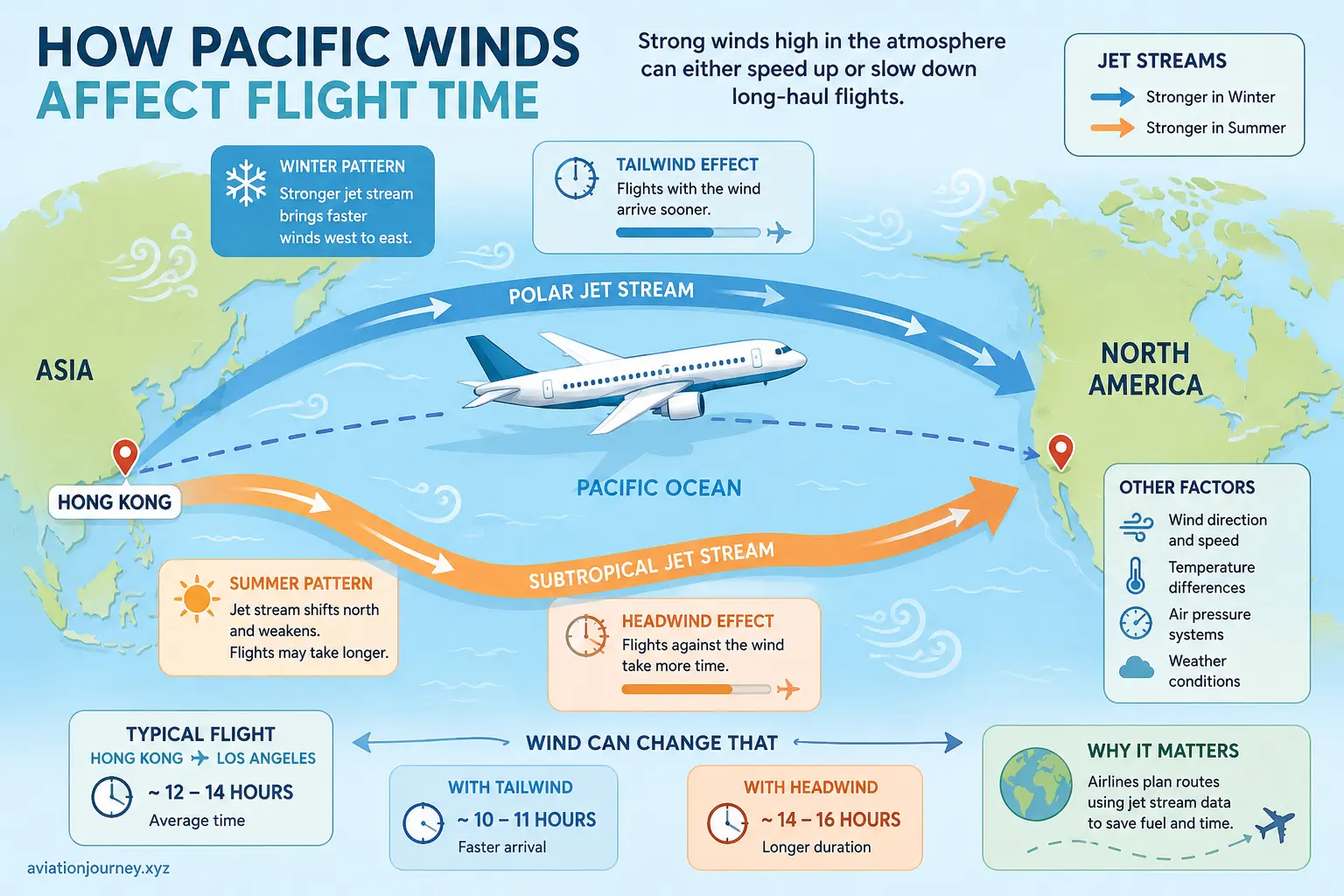
One of the most significant influences on trans-Pacific flight times is the jet stream. These powerful rivers of fast-moving air flow primarily from west to east across the Northern Hemisphere.
When aircraft travel in the same direction as these winds, they receive a natural speed boost. When traveling against them, they encounter resistance. Pilots often adjust routing to maximize efficiency and minimize fuel consumption. Aviation professionals regularly cite jet streams as a major factor affecting trans-Pacific schedules. Imagine swimming in a river. Moving downstream feels effortless because the water helps carry you forward. Swimming upstream requires more effort and takes longer. Aircraft experience a similar effect when navigating atmospheric wind currents.
These winds can reach speeds exceeding 100 knots in certain regions, creating substantial differences in flight duration. Even small changes in wind direction or intensity can influence arrival times by several minutes or more.
Seasonal Changes and Their Impact
Pacific wind patterns vary significantly throughout the year. During winter months, jet streams tend to strengthen, creating more pronounced effects on eastbound and westbound flights. Airlines may select alternative routes to avoid particularly strong headwinds or take advantage of favorable tailwinds. Seasonal weather systems can also influence routing decisions. Storm activity, turbulence zones, and changing atmospheric conditions may require aircraft to deviate from optimal paths. These adjustments can add time but are essential for safety and passenger comfort.
Travelers often notice that flight durations seem inconsistent from one trip to another. Seasonal wind variations are one of the primary reasons behind these differences.
Nonstop Flights Versus Connecting Options
Advantages of Nonstop Services
For most travelers, a nonstop flight is the preferred option. Eliminating connections reduces travel stress, minimizes the risk of missed flights, and significantly shortens total travel time.
Current nonstop services between Hong Kong and Los Angeles generally take around 13 hours, while connecting itineraries can extend total journey times to 16, 20, or even 24 hours depending on layover length. Nonstop flights also reduce luggage handling complexity. Checked baggage remains on the same aircraft journey, decreasing the likelihood of delays or mishandling. Families traveling with children and business travelers operating on tight schedules often find nonstop flights particularly valuable.
The convenience factor alone is often worth paying a slightly higher fare. After all, spending several additional hours in transit can be exhausting.
Popular Transit Airports
Tokyo Connections
Tokyo remains one of the most popular transit points for passengers flying between Asia and North America. Both Narita and Haneda airports offer extensive international connectivity.
Passengers connecting through Tokyo often enjoy excellent airport facilities, efficient transfer processes, and numerous airline options. Depending on scheduling, some travelers intentionally choose Tokyo connections to break up the long journey.
Seoul and Taipei Alternatives
Seoul Incheon and Taipei Taoyuan airports are also major connection hubs. These airports consistently rank among Asia’s best transit facilities and offer convenient onward flights to Los Angeles.
For budget-conscious travelers, connecting itineraries through these airports can sometimes provide substantial savings. The trade-off is additional travel time and the possibility of connection-related delays.
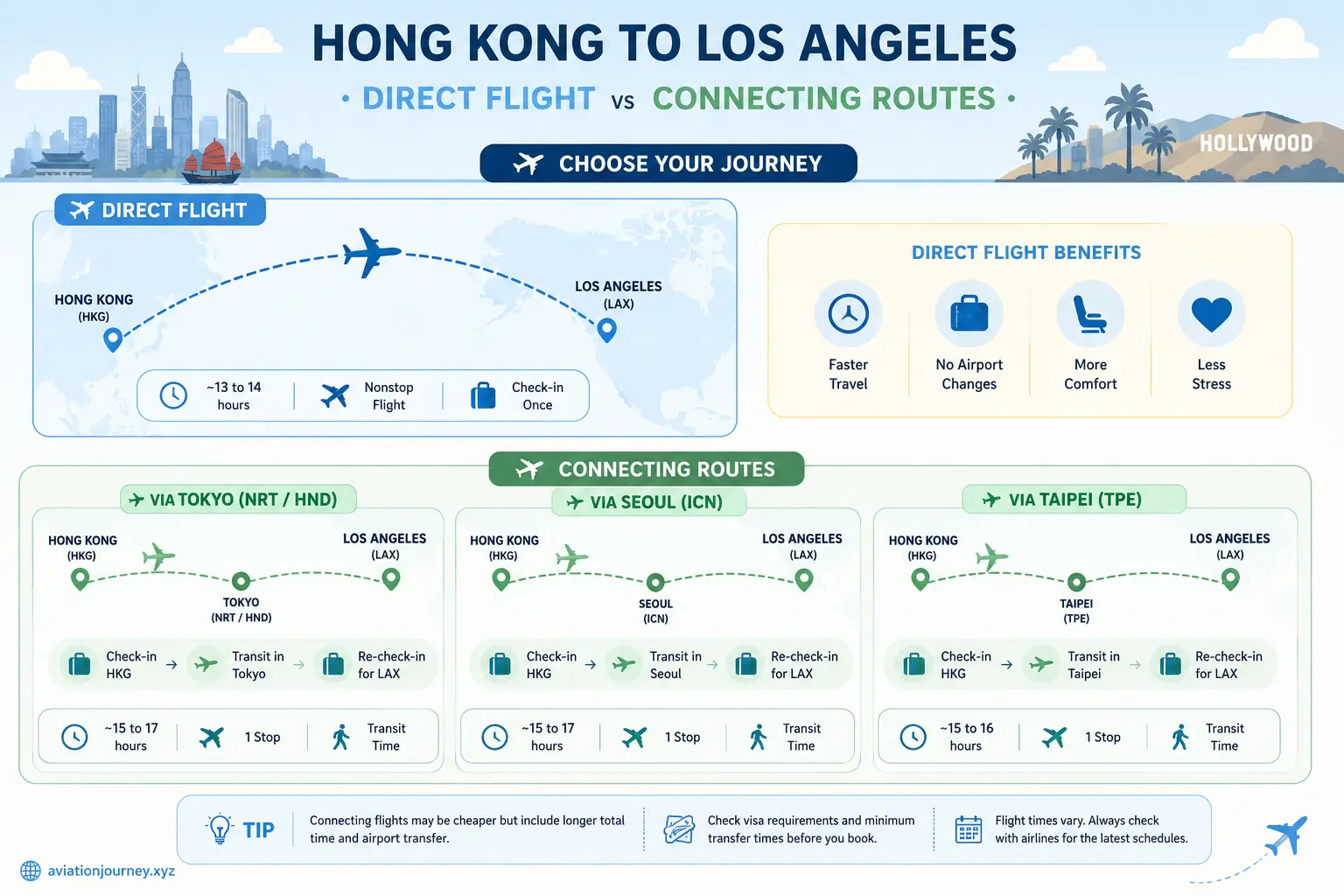
Choosing between nonstop and connecting flights ultimately depends on priorities such as budget, schedule flexibility, and personal travel preferences.
Crossing Time Zones and the International Date Line
Why Arrival Times Look Confusing
One fascinating aspect of flying from Hong Kong to Los Angeles is crossing the International Date Line. Travelers often leave Hong Kong in the evening and arrive in Los Angeles earlier on the same calendar day.
At first glance, this seems impossible. In reality, the aircraft crosses multiple time zones while traveling eastward. The time difference between Hong Kong and Los Angeles creates the illusion of “gaining” time.
This phenomenon can be disorienting. Travelers may spend over thirteen hours on an aircraft yet arrive with a local time suggesting only a few hours have passed. Understanding the date line helps eliminate confusion and makes itinerary planning easier.
For first-time international travelers, this experience often feels almost magical. Few other forms of transportation allow someone to depart one day and seemingly arrive before they left.
Managing Jet Lag Effectively
Jet lag occurs when the body’s internal clock becomes misaligned with local time. The Hong Kong-to-Los Angeles route crosses numerous time zones, making jet lag a common challenge.
Several strategies can help:
- Begin adjusting sleep schedules before departure.
- Stay hydrated throughout the flight.
- Limit excessive alcohol consumption.
- Seek sunlight exposure after arrival.
- Try to adapt quickly to local time.
Many experienced travelers recommend sleeping according to destination time rather than departure time. This simple adjustment can significantly reduce recovery time.
What Travelers Experience on Ultra-Long Flights
Cabin Environment and Daily Routines
A thirteen-hour flight becomes a temporary living space. Passengers eat meals, sleep, work, watch movies, read books, and move around the cabin.
Modern aircraft cabins are designed to make extended travel more comfortable. Improved air filtration systems, higher humidity levels, and lower cabin altitude simulations help reduce fatigue and dehydration compared to older aircraft generations.
Airlines carefully structure service schedules to help passengers maintain a sense of routine. Meal services, lighting adjustments, and quiet periods are coordinated to support rest and comfort.
Even with these improvements, spending half a day in a confined environment requires patience and preparation.
Entertainment, Meals, and Sleep Cycles
Most airlines operating this route provide extensive in-flight entertainment libraries featuring movies, television shows, games, music, and documentaries. Travelers can easily spend several hours immersed in entertainment alone.
Meal services are another key component of the experience. Depending on the airline and departure time, passengers typically receive multiple meals and snacks throughout the journey.
Sleep remains one of the most important challenges. Travelers who successfully rest during the flight often arrive feeling significantly better than those who remain awake throughout the journey.
Managing Comfort During Extended Air Travel
Practical Health and Comfort Tips
Comfort during a long-haul flight depends largely on preparation. Experienced travelers often pack travel pillows, eye masks, noise-canceling headphones, and comfortable clothing.
Hydration is particularly important. Aircraft cabins tend to have lower humidity levels, which can contribute to dehydration. Drinking water regularly helps maintain comfort and reduce fatigue.
Movement also matters. Standing periodically, stretching, and walking through the cabin can improve circulation and reduce stiffness. Many airlines encourage passengers to move around during extended flights.
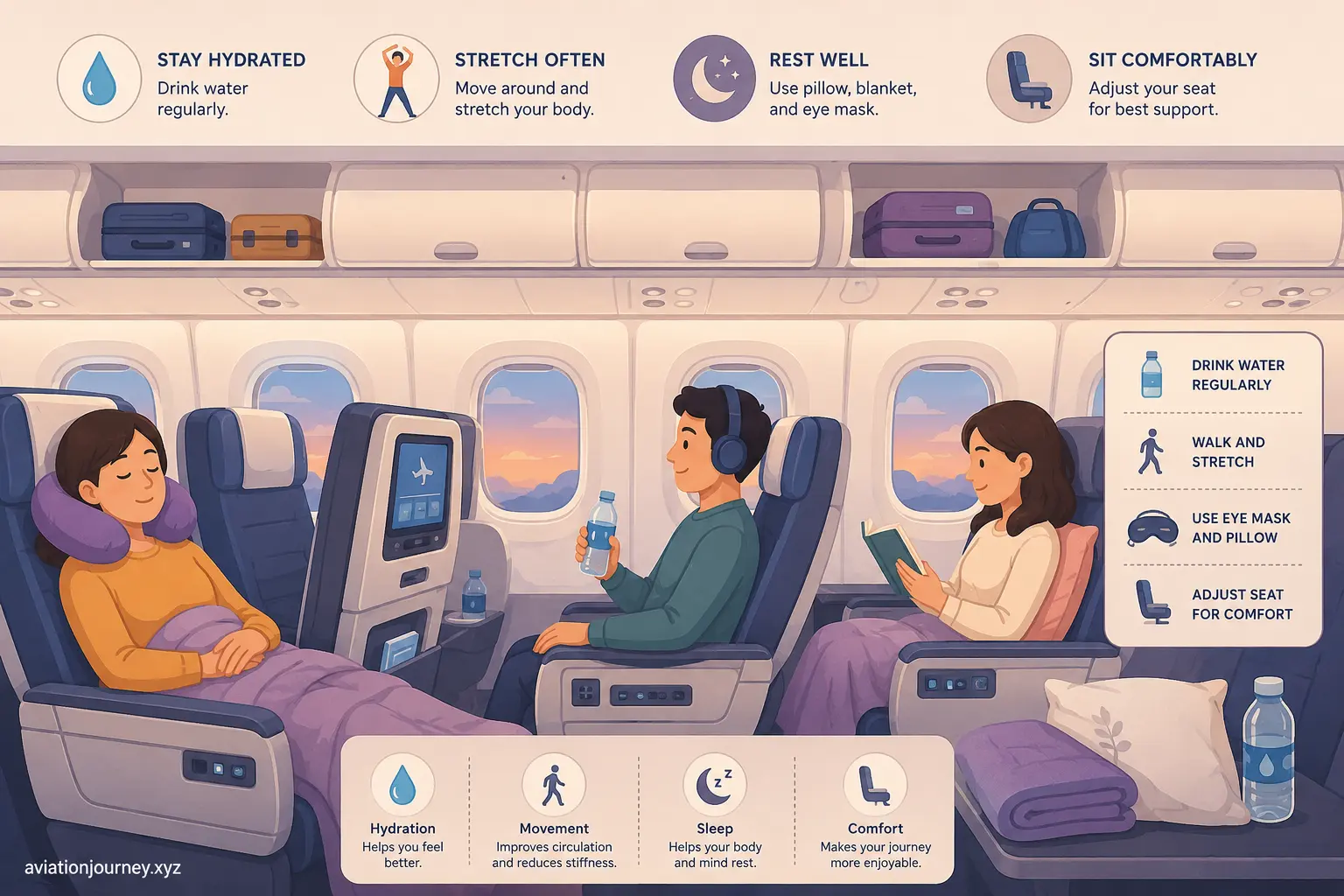
Small actions repeated throughout the journey can dramatically improve the overall experience.
Choosing the Best Seat for Long Flights
Seat selection can influence comfort more than almost any other factor.
| Seat Type | Benefits |
|---|---|
| Window | Better for sleeping |
| Aisle | Easier mobility |
| Exit Row | Extra legroom |
| Premium Economy | Enhanced comfort |
| Business Class | Lie-flat beds |
Passengers who value uninterrupted sleep often prefer window seats. Those who frequently move around may appreciate aisle access. Travelers willing to invest in additional comfort often find premium economy or business class worthwhile on flights exceeding thirteen hours.
Arrival Planning and Connection Strategies
Navigating Los Angeles International Airport
Los Angeles International Airport is one of the busiest airports in the United States. Arriving passengers must complete immigration, customs processing, baggage collection, and potentially terminal transfers before continuing their journey.
Planning ahead can save significant time. Knowing terminal locations, transportation options, and expected processing procedures helps reduce stress after a long flight.
International arrivals may experience varying wait times depending on arrival schedules and passenger volumes. Building flexibility into onward travel plans is always wise.
Many travelers underestimate the energy required after a thirteen-hour flight. Allowing sufficient time for airport procedures can make the arrival process much smoother.
Ground Transportation and Final Preparations
After clearing airport formalities, travelers have several transportation options:
- Rideshare services
- Airport shuttles
- Rental cars
- Public transit
- Hotel transportation

Bren Ortega is a 36-year-old American professional writer living in Albuquerque, New Mexico. As a contributor to aviationjourney.xyz, he creates in-depth educational content covering aviation trends, flight planning, and traveler resources with a strong emphasis on clarity and reliability. Drawing on years of editorial experience and extensive research, he is committed to publishing practical, trustworthy content that helps readers confidently navigate aviation-related topics.